
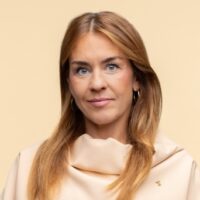
Liina Vahtras
Liina Vahtras is the Minister of Economic Affairs and Industry of the Republic of Estonia. Throughout her career, she has contributed to the development of Estonia’s digital state, entrepreneurship and innovation.
Skills as a Bridge between the Labour Market and Education
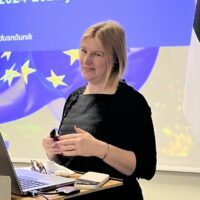
Riin Saluveer
Riin Saluveer, Economic Adviser at the European Commission Representation in Estonia, leads the policy team that monitors and explains EU policies and initiatives and supports their implementation in Estonia. Before leading the policy area, Riin worked in several European Commission departments in both Brussels and Tallinn, focusing on regional development, social policy and labour issues.

Patricia Navarro-Palau
OECD labour market economist Patricia Navarro-Palau focuses on skills development and the changing nature of labour markets. Her work includes comparing international experiences and contributing to the development of policy recommendations. Patricia has contributed to several analyses and studies exploring the links between education, adult learning, work and skills, as well as how societies can adapt to rapid change.

Jasper Van Loo
Coordinator of CEDEFOP’s Department for VET and Skills, leads the agency’s labour market and skills analysis at European level and is involved, among other things, in studying skills trends based on online job advertisements. His long-standing research and expert work has focused on skills needs, the match between skills and jobs, and better understanding changes in the labour market.
The Skills-Based Approach in the Context of Estonian Society and Its Meaning
In this panel discussion we ask: if AI takes over junior-level roles in companies, how can young people enter the labour market?
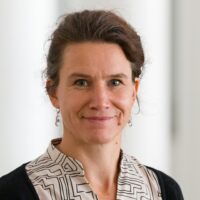
Aune Valk
Aune Valk, Vice-Rector for Academic Affairs at the University of Tartu, has made the advancement of teaching quality her mission. Her research interests include cross-cultural psychology and a range of education-related issues. With a background in psychology, Aune combines an evidence-based approach with the practical development of education. She has contributed to Estonian education and education policy for many years.

Reio Puistaja
The work of Reio Puistaja, Lead Teacher and Project Manager at the IT Academy of Tartu Vocational College, centres on better connecting education and the world of work. He focuses on making learning more practical and quicker to respond to changing skills needs. His daily work involves putting modern learning solutions and new approaches into practice to help learners better prepare for the working life of the future.

Karmen Paul
Karmen Paul, Head of Viimsi Gymnasium, has played a key role in founding and shaping the school since it was established in 2018, when Viimsi set out to create a modern, learner-centred upper secondary school. She continues to work on learner-centred education and the development of future skills. Karmen is involved in educational innovations that help connect school life with wider changes in society and the world of work, and that look for ways to make learning more meaningful and practical.

Maria Kütt
Maria Kütt, Vice-Chair of the Board of the Estonian Human Resource Management Association PARE and HR Manager at Threod, works with modern people management and HR practices. Her current focus is the changing world of work and the skills-based approach to recruitment. Maria’s experience offers insight into how organisations look for and assess employees’ skills, and what role traditional job titles will play in the future compared with actual skills and abilities.

Raul Aron
Raul Aron, Head of Economy and Education at the Estonian Employers’ Confederation, works to ensure that education better meets the changing needs of the labour market and the economy. In his work, he combines employers’ experience with data analysis to develop proposals for education and skills development and for increasing the competitiveness of the Estonian economy. Raul brings to the discussion employers’ perspective on the skills companies need and on how knowledge and skills acquired in education can be put to better use in the labour market.
Skills in the Age of AI: Which Are Growing and Which Are Disappearing?

Katrin Isotamm
Katrin Isotamm, Adviser to the Eesti.ai initiative at the Government Office, leads the work on promoting AI skills among the population. She has extensive experience in communications, technology and sustainability in both the private and public sectors. Katrin brings to Eesti.ai her experience in making new technologies understandable to people and supporting their adoption.
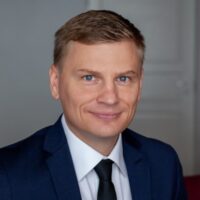
Mart Lumeste
Mart Lumeste, Co-founder and Partner at Intium, is a technology expert and entrepreneur. Mart is known for his broad experience in IT governance, software development and technology due diligence, and is actively working to modernise digital advisory services in Estonia and internationally.
How the Meaning of Skills Changes over Time
The discussion focuses on the balance between human and artificial intelligence: where people’s competitive advantage lies, and how companies are already reshaping their work processes and expectations. Representatives of the public and private sectors will share their experience of implementing AI so far. Joining the panel discussion:
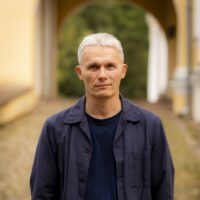
Tarmo Jüristo
Tarmo Jüristo, Founder and Head of the Liberal Citizen Foundation (SALK), is a civic activist and an advocate for an open society and liberal values.
Tarmo has taken part in a range of civic initiatives and has actively led discussions on democracy, social cohesion and the reliability of information.

Urve Mets
Urve Mets, Head of Research at the Estonian Qualifications Authority (Kutsekoda), analyses skills needs and labour market developments and is a recognised expert on ICT occupations, technological change and the labour market of the future. Within the OSKA system, she helps develop evidence-based strategies to support a competitive and sustainable labour market. On the panel, Urve will bring insights from the OSKA study on artificial intelligence. The study highlights that the successful adoption of AI requires data literacy, critical thinking and cybersecurity knowledge, as well as a readiness to redesign work processes.
Estonia’s Digital Skills Story
We present a forward-looking digital solution that makes skills visible, understandable and usable both for individuals and for employers. We introduce the Skills Compass, a practical tool in Estonia’s digital skills story that helps everyone map and assess their skills and find opportunities to acquire the skills they are missing.

Kerli Požogina
Kerli Požogina, Head of Skills System Development at the Estonian Qualifications Authority, leads development work on the skills register and the skills information system. The aim of the skills system is to help better align people’s skills and capabilities with the changing needs of the labour market, and to support more informed decisions in education, career planning and workforce development.

Otto Jõeleht
Otto Jõeleht, Digital Services Analyst at the Estonian Qualifications Authority, works on developing skills systems. His work focuses on the Skills Compass and on solutions for describing and systematising skills.
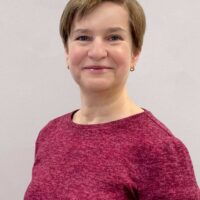
Aimi Püüa
The work of Aimi Püüa, Head of OsKuS Assessment at the Estonian Qualifications Authority, focuses on developing competence profiles and competence-based assessment, so that the skills, knowledge and competence needed at work become more visible to stakeholders and easier to assess. Her long experience in general education curricula, national external assessment, e-assessment and international education studies gives her current work a broader perspective on education and assessment and supports the implementation of a competence-based approach.
Observations on How Young People’s Skills Are Changing
In this discussion, practitioners share their observations on how young people’s skills are changing and on making skills visible and recognising them. They also discuss how personality traits, attitudes and practical skills affect people’s ability to cope at work and to progress in their learning and career paths.

Anu Realo
Academician Anu Realo’s research focuses on individual and cultural differences in personality traits, subjective well-being and values, and how these relate to people’s behaviour and choices. Estonian people and society in international comparison have been central to her research. Anu is a professor at the University of Warwick and Tallinn University, and a visiting professor at the University of Tartu.

Kadri Haavandi
Kadri Haavandi, teacher and career coordinator at Paikuse School, supports young people in their career choices and personal development. Under her leadership, the school has developed systematic career education that helps link school subjects with the world of work and supports young people in making informed choices. Kadri also contributes to the wider development of education by taking part in national working groups and sharing Estonia’s education experience both in Estonia and internationally.
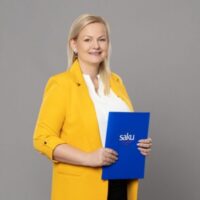
Gea Liblik
Gea Liblik, HR Manager at Saku Brewery, is also actively involved in the Women’s Voluntary Defence Organisation (Naiskodukaitse) and the Estonian Defence League (Kaitseliit). She chairs the Saue unit of the Harju district of Naiskodukaitse and has worked as a youth leader for more than ten years. Gea’s experience allows her to look at skills development from the perspective of both working life and youth development, with attention to practical, everyday life skills.

Oliver Mets
Oliver Mets, representative of the Federation of Estonian Engineering Industry, is well versed in industry developments and workforce needs. Oliver’s experience offers insight into employers’ perspective on the knowledge and skills companies need today and those that will be increasingly valued in the future.